Facilitating inclusive conversations to support the feasibility stage of a community-led regeneration project [March 2026]
As part of the feasibility work to renovate, rejuvenate and reopen Lido Brynaman, I was invited to design and facilitate an accessibility engagement workshop with community members, people with lived experience, committee members, architects and access specialists.
The purpose of the session was to bring real experience into the design process at an early stage. Rather than treating accessibility as a checklist or technical requirement, the workshop created space to explore what it would actually feel like to arrive, move through, use and enjoy the Lido.
In preparation, I met with the Lido’s Community Engagement Manager to understand the aims of the day, the stage the project had reached and the type of insight that would be most useful to the Committee and design team. I then prepared a facilitation brief, shaped the structure of the day and checked in with architects and committee members in advance through the project officer, so that the session was grounded in both community experience and the realities of the design process.
The workshop itself was designed to be interactive, visual and practical. Participants worked with draft plans, post-it notes, flipchart paper and voting dots to explore key areas including the journey to the Lido, arrival, parking, entrances, changing facilities, toilets, pool access, sensory experience, signage and the wider visitor journey.
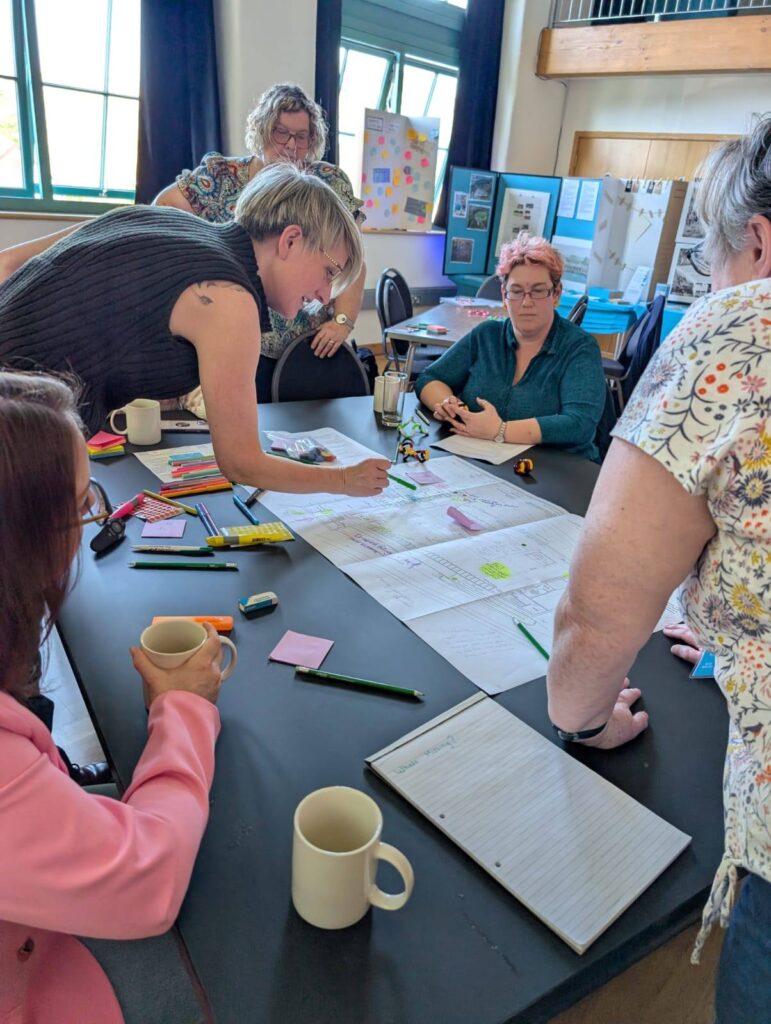
Photo credit: Heather Birnie [@heather.birnie]
A key part of the day involved looking at the developing plans in detail and asking: what works, what might create barriers, what needs further thought, and what could make the experience more welcoming, dignified and accessible for different people?
The afternoon included journey mapping and a facilitated Q&A with architects and access specialists. This helped connect lived experience with technical considerations, allowing participants to ask direct questions, test ideas and better understand some of the opportunities, constraints and decisions still to come (and vice versa).
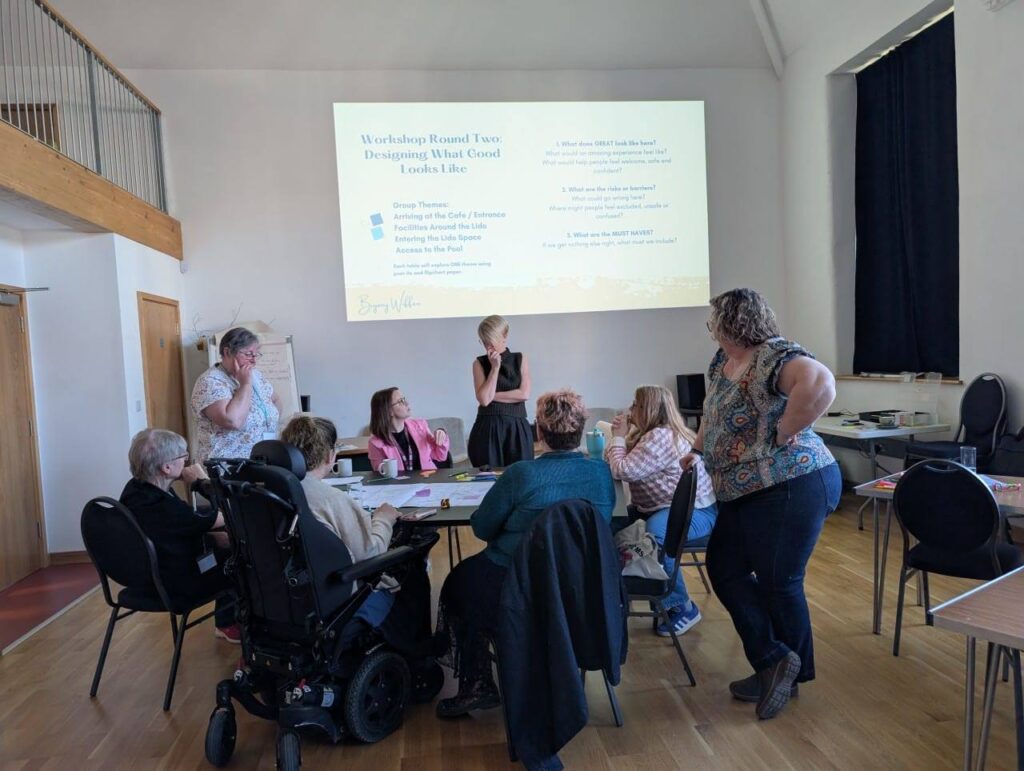
Photo credit: Heather Birnie [@heather.birnie]
Following the session, I wrote up a report for submission to the Lido Brynaman Committee and the Architectural Heritage Fund-supported project team, including the architects working on the feasibility stage. The report captured the key themes, practical considerations, questions raised and feedback generated through the workshop, helping to ensure the community voice could be carried forward into the next stage of design discussion.
For me, the value of this work was in creating a bridge between community voice and professional design. The day helped people engage meaningfully with plans that could otherwise have felt technical or inaccessible, while giving the design team grounded insight into how the space may work in real life.
I have since been invited back to take part in branding workshops with the marketing team, and I am excited to see the Lido Brynaman brand emerge as part of the next stage of the feasibility process.
This project reflects the kind of facilitation I love most: practical, thoughtful, inclusive and rooted in something that genuinely matters to a community.
